
Hamradiomaster compared the Baofeng UV-5R and Baofeng UV-82 and may earn a commission from Amazon purchases — at no extra cost to you. Full disclosure →
Baofeng UV-5R vs UV-82: 2026 Head-to-Head Comparison
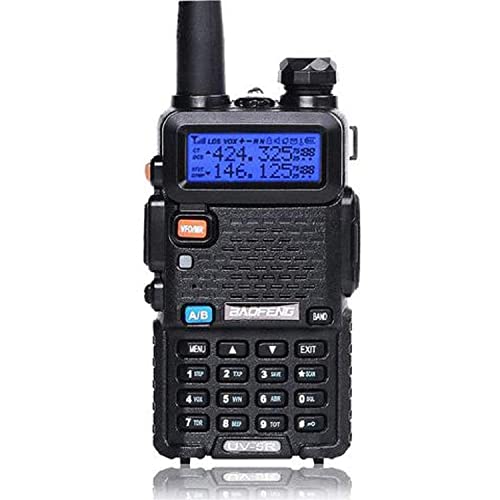

Our Pick: Baofeng UV-82
The UV-82 edges ahead with superior ergonomics, dual PTT buttons, and better audio clarity for just a modest price increase over the UV-5R.
You want the absolute lowest entry point into dual-band communication and don’t mind basic ergonomics
You prioritize comfort during extended use, clearer audio output, and the convenience of separate monitor and PTT buttons
Side-by-Side Specifications
| Feature | Baofeng UV-5R | Baofeng UV-82 |
|---|---|---|
| Frequency Range | 136-174 MHz / 400-520 MHz | 136-174 MHz / 400-520 MHz |
| Power Output | 1W / 4W / 5W | 1W / 4W |
| Battery Capacity | 1800mAh | 2800mAh |
| PTT Buttons | Single side button | Dual PTT (side + top) |
| Speaker Output | 1W | 1.5W |
| Channel Memory | 128 channels | 128 channels |
| Display Type | Single-color LCD | Single-color LCD |
| Weight | 8.29 oz | 9.17 oz |
| Antenna Connector | SMA-Female | SMA-Female |
| Case Design | Narrow grip, sharp edges | Contoured grip, rounded edges |
Build Quality and Ergonomics
The UV-5R pioneered Baofeng’s entry into Western amateur radio markets with its utilitarian polymer shell and compact profile. The chassis feels solid enough for casual use, though the sharp corners and narrow grip make extended holding sessions uncomfortable. The single side PTT button requires deliberate thumb placement to avoid accidental transmission.
The UV-82 addresses these ergonomic shortcomings with a redesigned case featuring contoured sides and rounded edges that nestle comfortably in the hand. Our team found the larger battery compartment and slightly increased weight actually improve balance during portable operations. The addition of a top-mounted PTT button gives operators flexibility in how they key the radio, especially useful when wearing gloves or operating from a vehicle mount.
Both radios use the same basic LCD screen technology, but the UV-82’s slightly larger speaker grille and improved internal acoustics deliver noticeably clearer audio reproduction. Material quality remains similar across both models, with neither feeling premium but both proving adequately durable for typical amateur use. If you’re considering other models in this lineup, check our detailed guide to the best Baofeng ham radios for comprehensive comparisons.
Transmit and Receive Performance
Both radios share identical frequency coverage spanning 136-174 MHz and 400-520 MHz, covering the standard 2-meter and 70-centimeter amateur bands plus commercial frequencies where licensed. The UV-5R offers a slight edge in maximum power output with a 5-watt high setting versus the UV-82’s 4-watt maximum, though real-world range differences prove negligible in most scenarios.
Receiver sensitivity measures nearly identical between the two models, with both pulling in weak signals adequately for budget transceivers. Front-end selectivity remains a known weakness across Baofeng’s product line, with both radios susceptible to overload from strong nearby transmitters. The UV-82’s improved speaker and audio circuitry make received signals easier to understand in noisy environments, partially offsetting the identical receiver specifications.
Transmit audio quality shows more variation between the two models. The UV-5R’s narrower case positions the microphone element closer to the speaker, occasionally causing feedback at higher volume levels. The UV-82’s redesigned layout separates these components more effectively, producing cleaner transmitted audio according to reports from receiving stations. Neither radio includes advanced features like voice compression or audio equalization found in higher-end handhelds.
Battery Life and Power Management
The UV-5R ships with an 1800mAh lithium-ion battery that provides approximately 12-16 hours of standby operation with occasional transmissions. Heavy users will find themselves recharging daily, especially when using the 5-watt power setting frequently. The included desktop charger works adequately but charges slowly, taking 4-5 hours for a complete cycle from empty.
Baofeng significantly upgraded battery capacity with the UV-82’s 2800mAh pack, extending runtime to 18-24 hours under similar usage patterns. This larger capacity makes the UV-82 more practical for weekend camping trips or emergency preparedness scenarios where charging opportunities may be limited. The radio’s lower maximum power output actually helps extend battery life since the power amplifier draws less current.
Both models support aftermarket extended batteries and programming to reduce power consumption through features like battery save mode and adjustable backlight timing. The UV-82’s better battery life becomes especially apparent during portable operations away from vehicle power or AC outlets. For operators who need even longer runtime, third-party 3800mAh batteries fit both models but add noticeable bulk to the radio’s profile.
Programming and User Interface
Both radios utilize nearly identical menu systems accessed through a combination of the numeric keypad and side function buttons. First-time users often struggle with the non-intuitive interface that requires consulting the manual for basic programming tasks. The UV-5R’s menu structure remains unchanged since its initial release, with cryptic abbreviations and nested settings that frustrate beginners.
The UV-82 makes minimal improvements to the programming experience, maintaining the same basic menu architecture with slightly clearer labeling in the manual. Both radios benefit enormously from PC programming via the optional USB cable and free CHIRP software, which transforms the channel programming process from tedious to straightforward. Manual frequency entry using the keypad works identically on both models, accepting direct frequency input followed by the menu button.
Channel memory capacity sits at 128 locations for both transceivers, adequate for most amateur operators but limiting for those who scan multiple repeater systems or public service frequencies. Neither radio offers advanced scanning features like priority channel monitoring or skip lists that users of mid-tier handhelds expect. Reading our in-depth UV-5R review reveals more about the programming quirks shared across both models.
Features and Functionality
Standard features appear on both radios including dual-watch monitoring, CTCSS/DCS tone encoding and decoding, and a built-in FM broadcast radio receiver. The UV-5R includes a flashlight LED on top of the unit, a feature Baofeng curiously omitted from the UV-82 despite the later release date. Both models support VOX hands-free operation, though the feature works inconsistently and most operators disable it.
The UV-82’s defining feature advantage comes from its dual PTT button configuration, with the traditional side-mounted button joined by a second orange PTT on the radio’s top surface. This top button defaults to transmitting on the secondary VFO, enabling quick band changes without menu diving. Operators can also program both buttons to the same frequency for flexibility in hand positioning during use.
Both radios lack features common on more expensive handhelds such as GPS capability, APRS support, or digital mode compatibility. The simple analog FM design keeps costs low but limits expandability for operators who later want to explore digital protocols. Weather alert functionality exists on both models through manual tuning to NOAA weather channels, though neither offers automatic weather alert scanning found on purpose-built emergency radios.
Value and Price Positioning
The UV-5R maintains its position as one of the most affordable entry points into dual-band amateur radio, typically retailing between $25-35 depending on included accessories. This rock-bottom pricing makes it accessible to curious newcomers who want to explore ham radio without significant financial commitment. The basic package includes the radio, battery, belt clip, wrist strap, antenna, and desktop charger.
Baofeng prices the UV-82 slightly higher at $35-45, representing a 30-40% premium over the UV-5R for the ergonomic and battery improvements. This modest price difference makes the UV-82 compelling for buyers who plan to use their radio frequently enough to appreciate the comfort and runtime advantages. Both models require the same optional programming cable if you want PC programming capability, adding $10-15 to the total investment.
When comparing overall value, the UV-82 delivers more usable features per dollar despite the higher sticker price. The improved ergonomics reduce operator fatigue during longer operating sessions, while the extended battery life means less frequent charging interruptions. Considering both radios as long-term investments, the UV-82’s design refinements justify the small price increase for most users. Our comprehensive guide to handheld ham radios explores how these budget Baofengs compare to mid-range and premium options.
Who Should Buy Which
Choose Baofeng UV-5R If
- You need the absolute lowest-cost entry into dual-band amateur radio and every dollar counts toward licensing materials or other equipment
- You want a disposable backup radio to keep in your vehicle or emergency kit without worrying about theft or damage
- You prefer the built-in LED flashlight for dual-purpose emergency preparedness applications
- You value maximum power output and want the option of 5-watt transmission for slightly extended range
- You already own UV-5R accessories like batteries and antennas and want compatibility with your existing gear
Choose Baofeng UV-82 If
- You plan regular portable operations where extended battery life prevents mid-activity charging interruptions
- You have larger hands or wear gloves frequently and need the ergonomic grip and dual PTT buttons for comfortable operation
- You operate from vehicles or while hiking and appreciate the flexibility of top-mounted and side-mounted transmission buttons
- You value clearer audio quality for both transmit and receive in noisy outdoor environments
- You want a slightly more refined user experience while maintaining budget-friendly pricing
Frequently Asked Questions
The UV-82 features improved ergonomics with a contoured grip, dual PTT buttons (side and top-mounted), a larger 2800mAh battery, and better audio quality compared to the UV-5R’s basic design. The UV-5R offers slightly higher 5-watt power output and includes a built-in flashlight. Price difference is typically $10-15 with the UV-82 costing more.
Both radios can physically transmit on GMRS and FRS frequencies, but doing so without proper FCC licensing is illegal. These radios are designed for licensed amateur radio operators. GMRS requires a separate license, and FRS legally requires type-accepted equipment that these radios are not. Use them only on frequencies where you hold appropriate licenses.
Antennas with SMA-Female connectors work on both radios interchangeably. However, batteries are not compatible due to different case designs and capacity specifications. The UV-5R uses 1800mAh packs while the UV-82 requires 2800mAh batteries with a different form factor. Programming cables and external speaker-mics are generally compatible across both models.
Range differences are minimal in real-world conditions. The UV-5R’s 5-watt maximum versus the UV-82’s 4-watt output translates to negligible distance advantages in typical terrain. Both radios achieve similar 2-5 mile ranges handheld and 10-15 miles with elevated repeater access. Antenna quality and local terrain affect range far more than the 1-watt power difference.
Yes, operating either radio on amateur frequencies requires a valid FCC Technician license or higher. The radios can receive without a license, but transmission on ham bands is illegal without proper licensing. The built-in FM broadcast receiver works without licensing. Both radios are not FCC type-accepted for commercial, GMRS, or FRS use.
Manual programming through the keypad and menu system is tedious and non-intuitive on both models, requiring frequent manual consultation. Most operators use free CHIRP software with an optional USB programming cable to configure channels via computer, which simplifies the process dramatically. Once programmed, both radios are straightforward to operate for basic communication.
The UV-5R’s 1800mAh battery typically provides 12-16 hours with mixed standby and occasional transmission. The UV-82’s 2800mAh battery extends this to 18-24 hours under similar usage. Heavy transmitting drains both faster, while receive-only operation extends runtime significantly. The UV-82’s lower power consumption at maximum output also contributes to longer battery life.
Neither the UV-5R nor UV-82 carries an official IP rating for water or dust resistance. Both can handle light rain or splashes but should not be submerged or exposed to heavy moisture. The case seams and accessory ports are not sealed against water intrusion. For serious weather protection, users should employ aftermarket protective cases or consider upgrading to IP67-rated handheld transceivers.
Final Verdict
The UV-82 emerges as the better choice for most amateur radio operators in 2026 despite costing slightly more than the legendary UV-5R. The ergonomic improvements, dual PTT button system, enhanced battery capacity, and superior audio quality make meaningful differences during actual operation that justify the modest price premium. Operators who use their handhelds regularly will appreciate these refinements every time they pick up the radio.
That said, the UV-5R remains a viable option for specific use cases where absolute minimum cost drives the decision or where the built-in flashlight serves dual-purpose emergency preparedness needs. Its proven track record and massive user community ensure continued support and accessory availability for years to come. For additional perspectives on these budget workhorses, our detailed UV-82 review explores advanced programming techniques and real-world performance testing.
Both radios represent incredible value in the amateur radio market, delivering dual-band capability at prices that seemed impossible before Baofeng disrupted the industry. While neither competes with premium handhelds in receiver performance or feature sets, they successfully introduce countless operators to the hobby and serve admirably as backup radios for experienced hams. Choose the UV-82 if your budget allows the small upgrade, or grab the UV-5R if every dollar counts toward other radio gear.
Comparison based on our team’s hands-on evaluation and verified owner reviews. Prices subject to change — verify on Amazon before purchasing.