
Hamradiomaster may earn a commission from Amazon purchases — at no extra cost to you. Our recommendations reflect our team’s evaluation, not affiliate payouts. Full disclosure →
How to Choose a Ham Radio: Complete Buying Guide for 2026
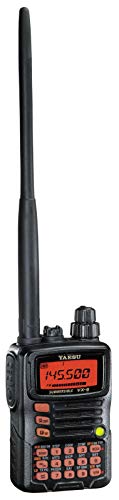
Choosing your first ham radio—or upgrading your station—requires understanding the fundamental differences between radio types, frequency bands, and operating modes. In 2026, amateur radio operators have access to an unprecedented range of equipment, from budget-friendly handheld transceivers to advanced HF base stations with digital signal processing. The right choice depends on your license class, intended activities, available space, and budget constraints.
Whether you plan to participate in emergency communications, experiment with digital modes, work DX on HF bands, or simply chat with local repeaters, selecting appropriate equipment sets the foundation for your amateur radio journey. Our team has evaluated dozens of transceivers across all categories to help you make an informed decision that aligns with your specific operating goals and technical requirements.
What This Guide Covers
- Types of Ham Radios
- Essential Features to Consider
- Common Buying Mistakes
- Budget-Based Recommendations
- Frequently Asked Questions
Types to Know Before You Buy
Handheld (HT) Transceivers
Portable VHF/UHF radios designed for 2-meter and 70-centimeter bands, typically outputting 1-5 watts. These battery-powered units offer maximum portability and excel at local communications through repeaters or simplex operations.
Pros
- Ultimate portability for hiking, travel, and mobile operations
- Lowest entry cost for new operators
- Built-in antennas eliminate separate antenna requirements
- Ideal for Technician-class license holders
Cons
- Limited to VHF/UHF frequencies only
- Lower power output restricts range
- Small displays and controls can be difficult to operate
- Battery life limitations during extended operations
Mobile Transceivers
Vehicle-mounted or portable radios offering higher power output (typically 25-75 watts) for VHF/UHF or dual-band operation. These units require external power and antenna systems but provide significantly better performance than handhelds.
Pros
- Higher power output extends operational range
- Larger displays and easier control access
- Better receiver sensitivity and selectivity
- Can serve as base station with power supply
Cons
- Requires installation and external antenna
- Not truly portable without accessories
- Still limited to VHF/UHF in most models
- Vehicle installation may require professional help
HF Base Station Transceivers
Fixed-location radios covering HF bands (1.8-30 MHz) for long-distance communications, requiring General or Amateur Extra licenses. These sophisticated units support SSB, CW, and digital modes with power outputs ranging from 10 to 100 watts.
Pros
- Access to worldwide communications on HF bands
- Support for multiple operating modes including digital
- Advanced features like built-in antenna tuners and DSP
- Best receiver performance and sensitivity
Cons
- Requires General or Extra class license
- Needs significant antenna system investment
- Higher cost and complexity for beginners
- Fixed installation limits portability
All-Mode/All-Band Transceivers
Versatile radios covering HF through UHF bands in a single unit, supporting AM, FM, SSB, CW, and digital modes. These “shack-in-a-box” solutions eliminate the need for multiple radios but require appropriate licensing for HF operation.
Pros
- Single radio solution for all bands and modes
- Reduces equipment clutter and complexity
- Excellent for operators upgrading license class
- Built-in cross-band repeat capabilities in some models
Cons
- Higher initial investment than single-band radios
- Complexity can overwhelm new operators
- May offer compromises in specific band performance
- Repair costs higher due to integrated design
QRP (Low Power) Transceivers
Compact radios operating at 5-10 watts output, emphasizing portability and efficiency over power. These specialized units appeal to operators who enjoy the challenge of making contacts with minimal power and portable antennas.
Pros
- Extremely portable for field operations
- Lower power consumption extends battery life
- Develops operating skills and antenna expertise
- Active community and operating events
Cons
- Challenging for beginners to achieve contacts
- Requires excellent antenna systems
- Limited operating modes in many models
- Not ideal as primary station radio
Key Features to Evaluate
Frequency Coverage and Band Access
Ensure the radio covers bands authorized for your license class. Technician licenses require VHF/UHF coverage, while General and Extra classes benefit from HF band access for long-distance communications and DX work.
Power Output
Higher wattage extends range but increases power consumption and heat generation. Handhelds typically offer 1-5W, mobiles 25-75W, and base stations 10-100W, with adjustable power levels for different operating conditions.
Operating Modes
Modern transceivers support multiple modes including FM for repeaters, SSB for HF contacts, CW for Morse code, and digital modes like FT8 and PSK31. Verify the radio supports modes you plan to use regularly.
Built-in Antenna Tuner
Internal tuners automatically match antenna impedance, allowing operation on multiple bands with a single antenna. This feature saves money and simplifies station setup, particularly valuable for HF operations.
Digital Signal Processing (DSP)
DSP filters reduce noise, eliminate interference, and improve signal clarity in crowded band conditions. Advanced implementations offer customizable filter shapes, noise reduction, and notch filters for superior reception quality.
Display Quality and User Interface
Large color displays, intuitive menu systems, and physical knobs simplify operation during contests or stressful situations. Touchscreens offer convenience but may be difficult to use with gloves or in bright sunlight.
Common Mistakes to Avoid
Recommendations by Budget
Budget
$25 – $200Entry-level equipment for new Technician licensees focusing on local VHF/UHF communications and learning basic operating procedures.
 Top Pick Budget
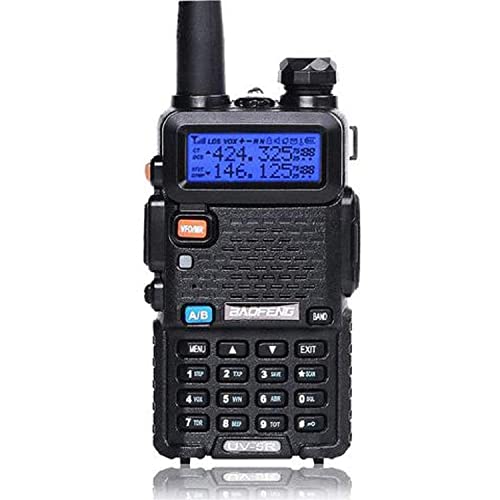
Baofeng UV-5R
The UV-5R remains the most popular entry-level handheld for budget-conscious operators in 2026, offering dual-band VHF/UHF coverage, 4-watt output, and basic FM capabilities. Despite its limitations, this radio provides a functional introduction to amateur radio operations, particularly for Technician-class operators exploring local repeaters and simplex communications.
Check Price on Amazon Better build quality
TYT TH-UV88
An improved alternative to the UV-5R with more robust construction, clearer audio, and simplified programming for operators willing to spend slightly more.
Check Price on AmazonMid-Range
$400 – $1,000Quality transceivers offering enhanced features, better build quality, and support for operators progressing beyond basic communications.
 Top Pick Mid-Range
Yaesu FTM-400XDR
This dual-band mobile transceiver delivers 50-watt output, integrated APRS functionality, and a bright color display in a compact package. The FTM-400XDR excels at both mobile and base station operations, making it ideal for operators seeking versatility without the complexity of HF equipment, and it’s frequently featured in our guide to top mobile transceivers.
Check Price on Amazon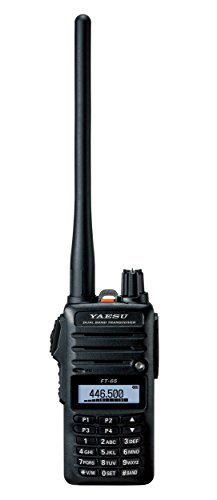 Handheld alternative
Yaesu FT-65R
A rugged dual-band handheld with simplified controls, excellent receiver sensitivity, and long battery life for operators prioritizing portability.
Check Price on Amazon DMR digital capability
Anytone AT-D878UV
Adds digital DMR modes and GPS to dual-band analog operation, perfect for operators exploring digital voice communications.
Check Price on AmazonPremium
$1,200 – $1,800Professional-grade equipment for serious operators requiring HF capabilities, advanced features, and exceptional performance across all modes.
 Top Pick Premium
Icom IC-7300
The IC-7300 revolutionized entry-level HF transceivers with its large color touchscreen, real-time spectrum scope, and exceptional DSP performance. This 100-watt HF/6-meter radio supports all modes including SSB, CW, AM, FM, and digital operations, offering features previously found only in radios costing twice as much, and consistently ranks among selections in our base station recommendations.
Check Price on Amazon All-band coverage
Yaesu FT-991A
Covers HF through UHF in one unit with built-in antenna tuner, making it ideal for operators wanting comprehensive band access without multiple radios.
Check Price on Amazon Superior receiver performance
Kenwood TS-590SG
Offers exceptional receiver dynamic range and sensitivity for contesting and weak-signal DX work, preferred by competitive operators.
Check Price on AmazonFrequently Asked Questions
In the United States, the FCC issues three amateur radio license classes: Technician (entry-level, VHF/UHF privileges), General (adds most HF bands), and Amateur Extra (full privileges). You must pass a written examination for each level, with no Morse code requirement as of 2007. Start with Technician class to begin operating, then upgrade as your interests expand. Our comprehensive licensing guide walks you through the complete process from study materials to exam day.
No, transmitting on amateur radio frequencies without an FCC license is illegal and subject to significant fines. However, you can legally listen to amateur radio communications using any receiver without a license. Many aspiring operators monitor local repeaters and HF bands while studying for their licensing exam to familiarize themselves with operating procedures and radio capabilities.
For most Technician-class operators, a quality handheld transceiver provides the best introduction to amateur radio at the lowest cost. Handhelds let you access local repeaters, participate in nets, and learn operating procedures without installing antennas or power supplies. Consider a mobile or base station radio after gaining experience and determining your primary operating interests, or explore options in our handheld radio buyers guide.
A basic Technician-level station with a handheld radio costs $100-$300 including antenna and accessories. A quality mobile or base station setup requires $800-$1,500 including radio, antenna, power supply, and coax. HF stations for General or Extra operators typically start at $1,500-$2,500 for radio, antenna system, tuner, and supporting equipment. Always budget more for antennas than radios—antenna performance matters more than transceiver features.
Analog modes like FM and SSB transmit voice as continuous waveforms, while digital modes convert voice or data into digital packets before transmission. Digital modes like DMR, D-STAR, and System Fusion offer clearer audio in weak signal conditions, data transmission capabilities, and integration with internet linking systems. Many modern radios support both analog and digital operation, providing flexibility as you explore different communication methods.
Not necessarily—many transceivers cover multiple bands. Dual-band handhelds and mobiles operate on 2-meters and 70-centimeters simultaneously. All-band transceivers like the Yaesu FT-991A cover HF through UHF in one unit. However, specialized single-band radios often deliver better performance in their specific range. Your choice depends on licensed privileges, intended activities, and budget constraints.
Dual-band radios simultaneously receive and transmit on two different frequency bands, typically 2-meters (144-148 MHz) and 70-centimeters (420-450 MHz). This capability lets you monitor two repeaters or frequencies at once, cross-band repeat between bands, and operate on the most appropriate band for conditions without changing radios. Nearly all modern mobile and handheld VHF/UHF radios offer dual-band operation.
The antenna system dramatically outweighs radio choice in overall station performance. A $100 radio with an excellent antenna significantly outperforms a $1,000 radio with a poor antenna. Invest in quality coaxial cable, proper antenna height and positioning, and antenna designs optimized for your operating frequencies. Many experienced operators recommend spending at least as much on antenna infrastructure as on the transceiver itself for balanced station performance.